Introduction to music selections at Melodia’s concert “Always Something Sings,” by Sarah Woodruff
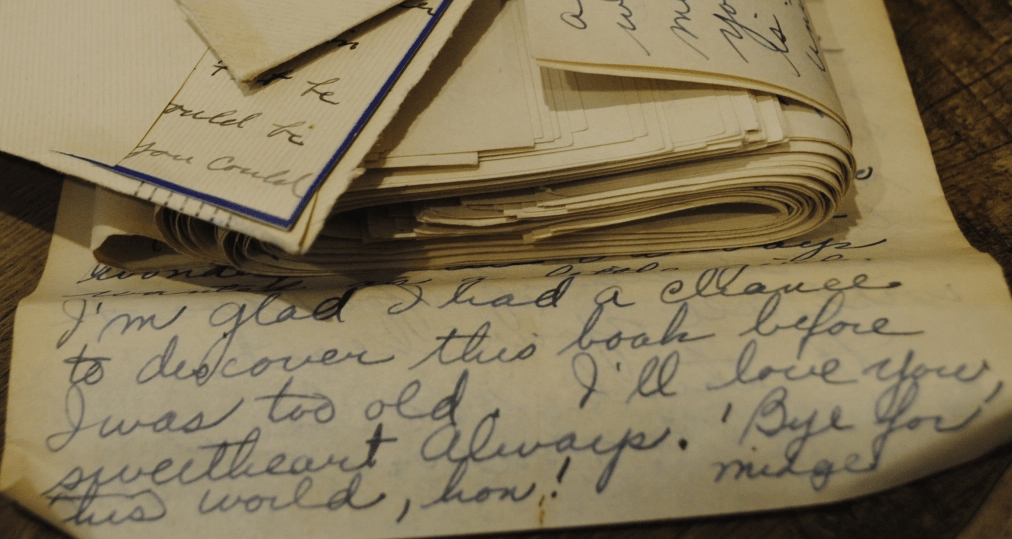
An excerpt from the last of twenty-eight unsent letters found in an attic in Pennsylvania, dated June 1944: “I believe this is to be my final chapter, but I just wanted another word with you before I closed ‘our book.’ It was fun reading it, but just as I feel when I close any book I love, I hate to part with the characters. They’ve become a part of my life and I a part of theirs. I never cease to profit from their lives and experiences. I owe much to you–the hero of ‘our story.’ You were wonderful–all I always wanted as a little girl. I’m glad I had a chance to discover this book before I was too old. I’ll love you, sweetheart, always. Bye for this world.”
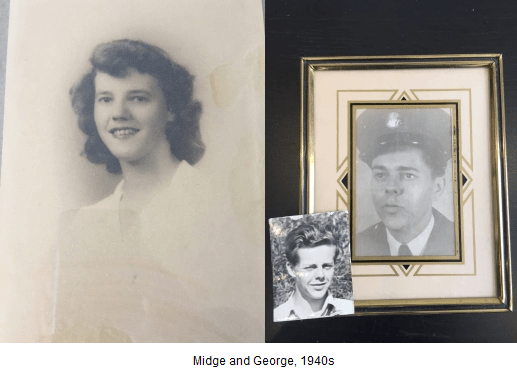
It would have changed everything if there had been an address for this letter to go to, but the person on the receiving end was MIA, his plane believed to have been shot down over Germany just before D-Day: his name was George Ely Jr, my grandmother’s fiancé. Some of the men with George had parachuted out, and there were reports of others being held by the Germans as POWs. There was hope, and then there wasn’t. My grandmother, Midge, waited a year for a slim volume of vague answers; four more years for a body to bury. Through a WWII researcher 78 years later, I was able to learn things she likely never knew: the plane actually went down in Italy; civilians carried George’s body from the crash site to a local cemetery, joined by a priest for burial; eventually he was interred at an Italian military cemetery. It may not have made a difference to Midge if she had been able to read the 125 pages that impassively recounted a life; instead of waiting for an ending in 1944, she’d written a poetic one for the two of them that mattered.
Losing people then had become routine in the way a week of sun will eventually turn into rain, and yet it was still easy to imagine death of this sort as escapable. Love was too strong; a man was too young; a soldier might not see battle; the war would end in time. For a while, I thought about how the best and worst days of my grandmother’s life had been so closely intertwined, and I wondered how a person could experience such extremes in so few years and continue on. Slowly, as I reflected on her life and felt closer to her twenty-something self through the letters she and George had left behind,

I realized it wasn’t the only best thing she’d experienced—there was her marriage to my grandfather, the birth of her four children, my own birth and that of her ten other grandchildren. It was moments in front of her classroom, connecting with her students; the hours spent learning and helping others to learn; affirming her faith and supporting her congregation. It was like having two lives at once: one that you guarded in your mind, and the other that you tended to in the present. You might have everything, and then you have nothing, and then you have a version of something again. Peace is a fluctuating spectrum of color, darker after turmoil, brighter in periods of stability. Or maybe it’s the other way around, the contrast allowing us to find a way forward, moving in waves as we find our footing, then lose that feeling again.

My grandmother used music and theater to cope, and I think she would have loved that women’s voices are the ones telling stories through song today—The Dirge of Two Veterans by Harl McDonald, text by Walt Whitman, retelling an experience quite like hers, one with striking imagery and unexpected transitions; Peace by Emma Lou Diemer, a calm, submersion of sound, melodies echoing and interweaving; Days of Beauty, by Ola Gjeilo, text by Emily Bronte, which begins in unison and feels a bit whimsical, self-reflective. And finally Battle Hymn of the Republic by Peter J. Wilhousky, text by Julia Ward Howe, a fierce pacifist in this country’s darker days of civil strife, to a powerfully uplifting tune.

Of the collection, I think this line from The Dirge of Two Veterans would have most resonated with my grandmother: “The moon gives you light, and the bugles, and the drums give you music, and my heart gives you love.
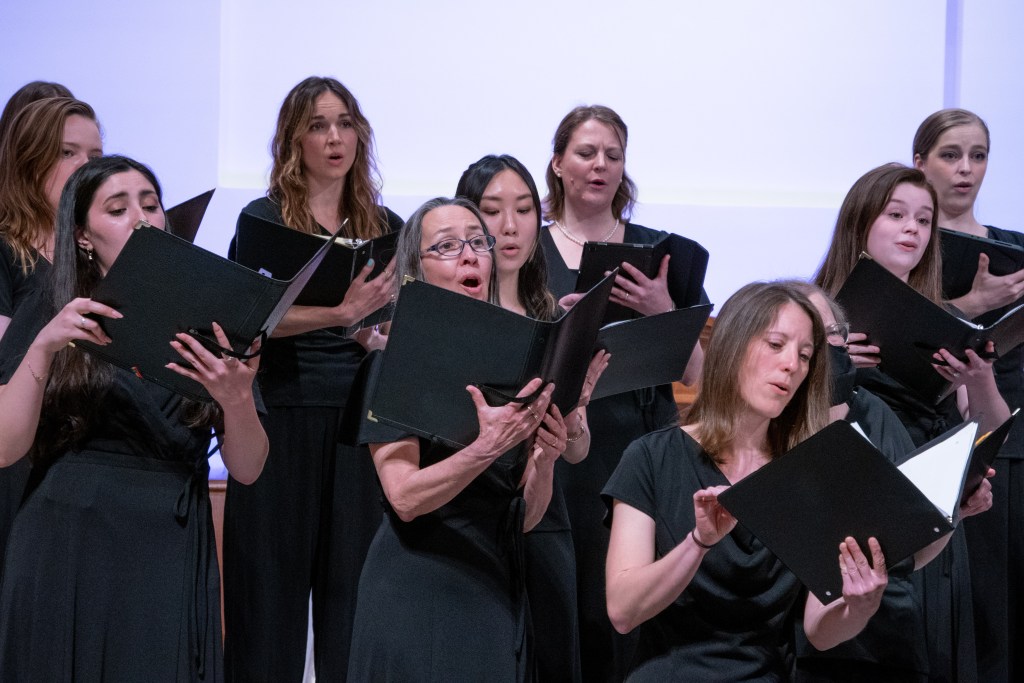
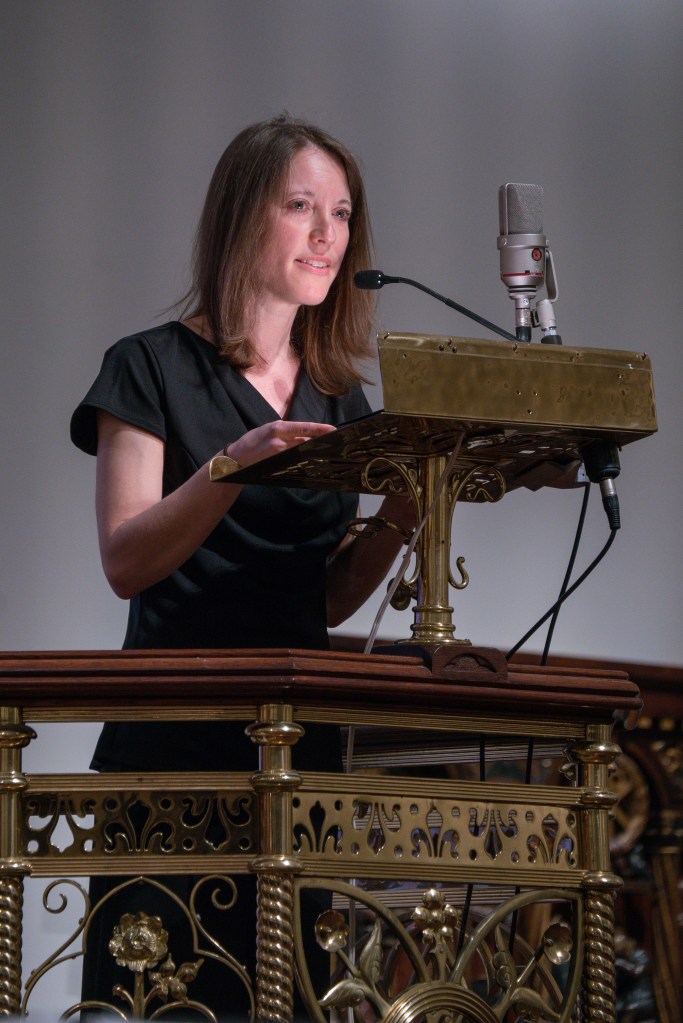
Sarah Woodruff, left, telling the story; right front, singing with the choir.
Listen to the concert, Always Something Sings on YouTube
 Melodia Women's Choir